The challenge
The mindfulness category has a structural retention problem. Users sign up, do one or two long guided meditations, feel a flicker of calm, and tell a friend. Then most of them stop opening the app within thirty days. The platforms built around this audience have been quietly struggling with the same curve for the better part of a decade.
The diagnosis is usually framed as a content problem. More meditations. Different teachers. Celebrity voiceovers. None of those things, in practice, moves the retention curve — because the curve is not about content. It is about what the platform asks the user to do, at what frequency, with what activation energy. Mindfulness apps are designed for the user the founder wishes they had. The user the founder actually has is tired, scattered, holding a phone, and reaching for something that takes ten seconds.
Michael O'Brien founded Pause, Breathe, Reflect with a different conviction: the practice itself was the product. The platform's job was to make returning to it the easiest thing in the user's day — not the most ambitious. That conviction produced an architectural decision unlike anything else in the category.
The thesis: introduce the digital microdose
PBR introduced a category of practice that did not previously exist in mindfulness tech: the digital microdose. A unit of practice designed for the way humans actually use their phones — not the way wellness apps wish they did.
Nobody, in the actual conditions of a normal day, decides to do a twenty-minute meditation. They might decide to take a breath. They might decide to smile. From there, the practice compounds.
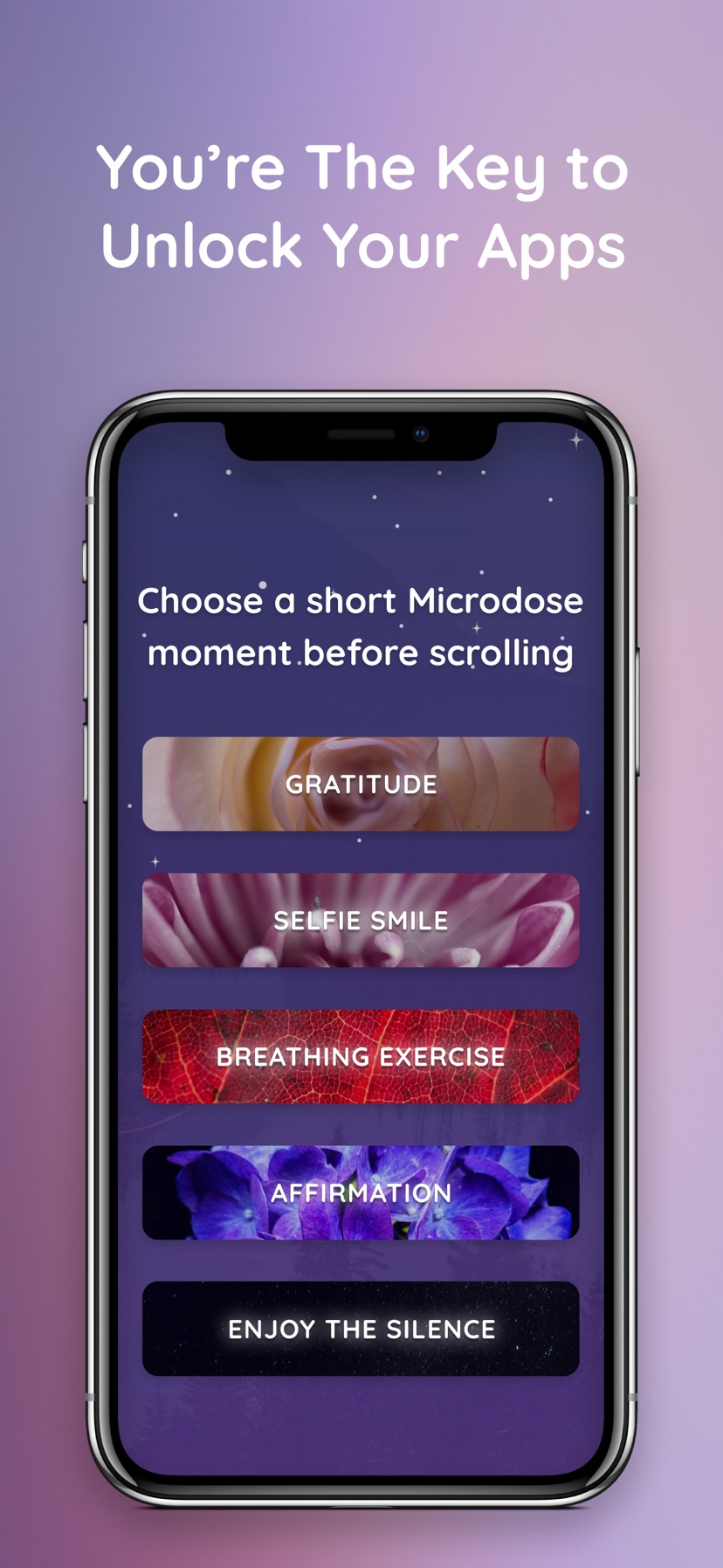
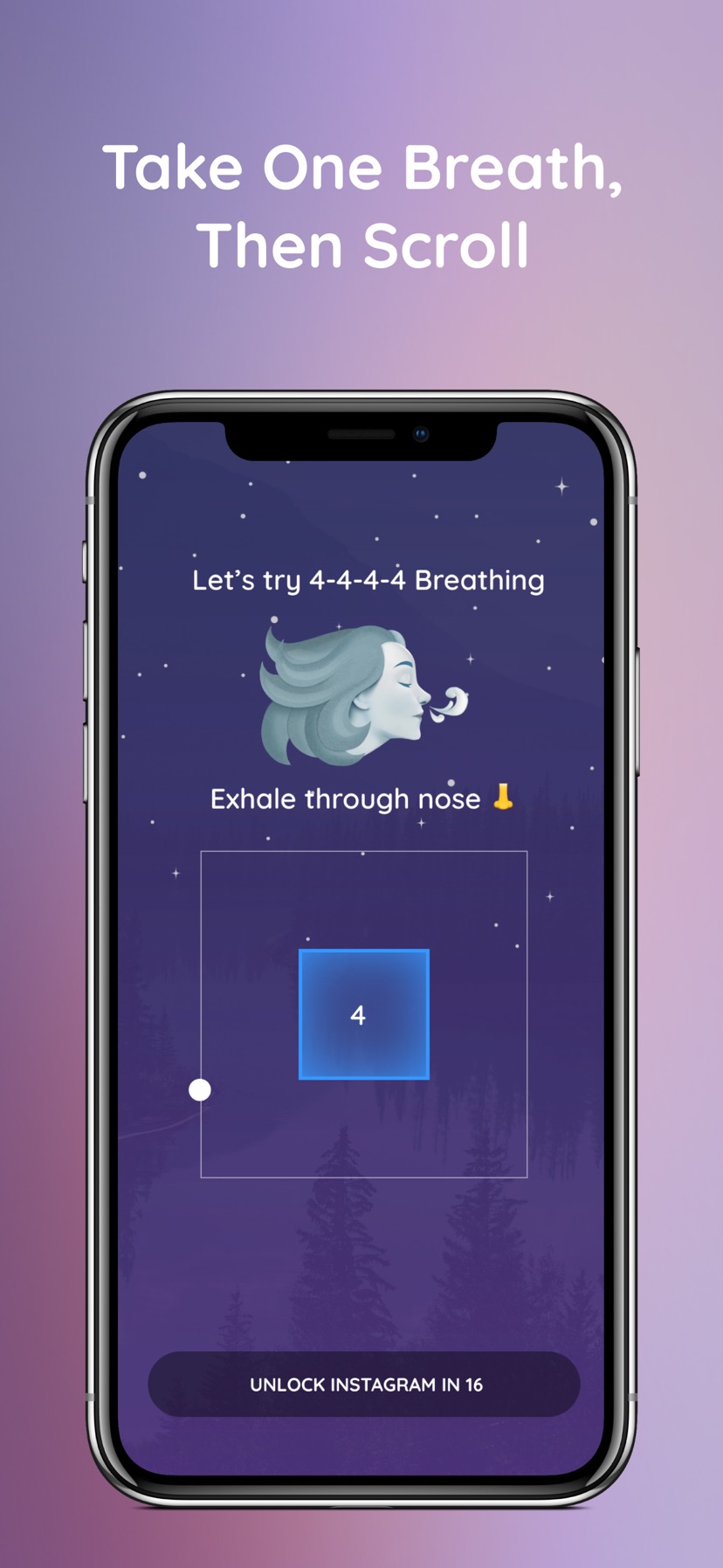
The microdose framework scales the practice down to the smallest moment a human can give it, then layers up. At the bottom: sub-ten-second practices. A single breath. A smile. A gratitude. An affirmation. Multiple different breath patterns to try, depending on what the user's nervous system needs in the moment. Above that layer: hundreds of one- and two-minute meditations — not abbreviated versions of "real" meditation, but the practice itself scaled to the moment the user actually has. Above that: three- and five-minute guided sessions for when the user has slightly more space. The dose meets the day.
The interrupt: meeting the mindless reach
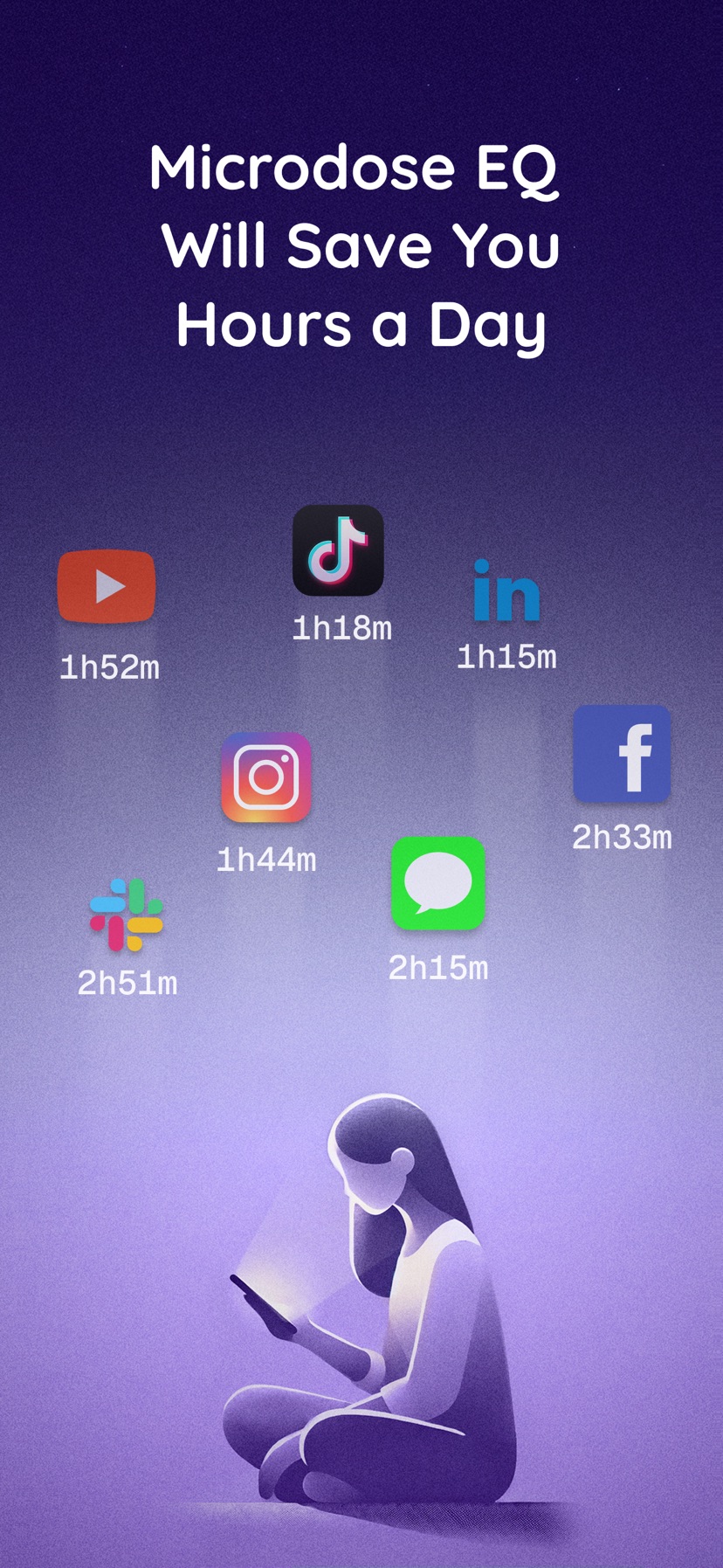
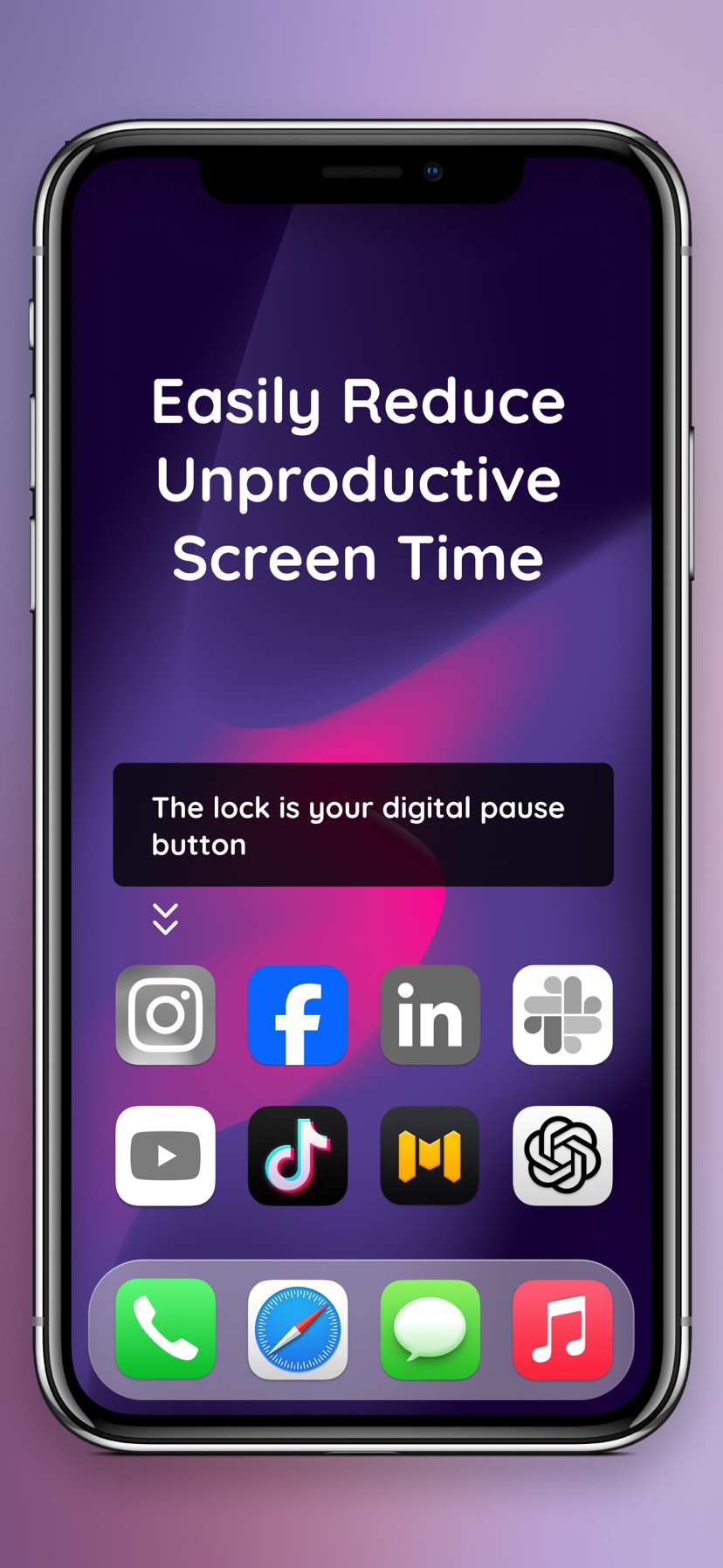
The most innovative surface in the platform is the one that does not look like a mindfulness feature at all. PBR can lock the user's most distracting apps — the ones they open mindlessly forty times a day. To get back into those apps, the user has to do a digital microdose first. A breath. A smile. A gratitude. An affirmation.
This is behavioral interrupt architecture, applied at the exact moment the unhealthy pattern fires. It is not a notification asking the user to be more mindful at some later time; it is the system meeting the user inside the pattern and replacing the mindless reach with a sub-ten-second moment of practice. The user does not have to remember to be mindful. The platform structurally inserts mindfulness into the path of the behavior they were already executing.
The data shows the interrupt working in both directions. It is the single most powerful driver of the platform's frequency-of-use numbers — the place where most of the six daily opens are happening. And it is also where the platform changes the user's relationship with their other apps, not just with mindfulness. Users find themselves opening Instagram less, not because they tried harder, but because the system put a microdose in front of them every time.
The architecture
Four reinforcing surfaces, each calibrated to a different scale of practice and a different moment in the user's day:
- The microdose library. Sub-ten-second practices, one- and two-minute meditations (hundreds of them), and three- to five-minute sessions. Designed so the dose is always available at whatever scale the user can give in the moment.
- The app-lock interrupt. The behavioral surface. The mindless app reach becomes a microdose. The pattern that was killing the user's attention becomes the pattern that rebuilds it.
- The five-minute daily meditation. The consistency anchor — a short, structured, guided meditation designed to be sustainable for years rather than weeks. User data shows strong sustained listenership.
- Michael AI — the conversational meditation coach. The user tells Michael AI what is going on. The AI affirms them in Michael's voice, then intelligently recommends a meditation calibrated to their current state. Not a chatbot bolted onto a content library — a personalization layer designed to remove the decision friction that kills most mindfulness apps.
The four surfaces compound. The microdose library establishes the practice scale. The app-lock interrupt delivers it at the moment of unhealthy pattern. The daily meditation anchors the rhythm. Michael AI removes the cognitive load of choosing what to do next. The user experiences this as an app that simply understands what they need, when they need it.
The outcome
The headline number is the one most mindfulness platforms cannot produce: the average PBR user opens the app six times a day. Most apps in this category measure success in DAU/MAU ratios and watch them collapse over time. PBR measures success in opens per user per day — and the number is six. Every one of those opens is a small return to practice: a breath, a smile, a gratitude, an affirmation, the daily meditation, or a conversation with Michael AI.
The platform sustains a 4.9-star rating across iOS and Google Play, and is live and actively growing in a category where most products quietly churn at painful rates. The deeper outcome is not on the app store leaderboard. It is in the user's daily life. Six times a day, the platform is the small return point that keeps the practice alive — and the app-lock interrupt is changing the user's relationship with their phone as a whole, not just with mindfulness.
That is what the implementation infrastructure was designed to produce. It is the difference between a mindfulness app that lives in the app store and a mindfulness practice that lives in someone's day.
Josh is a best-in-class partner who drives transformation through innovation and heart. He goes beyond ideation and stays until the impact is real.
.webp)
.webp)